CITY WALKS · 7 min read
How to plan a self-guided walking tour
A good city walk is planned like a short story: a start, a few strong stops and an ending worth walking to. Here is how to build one, anywhere.
Published · Zenbyte
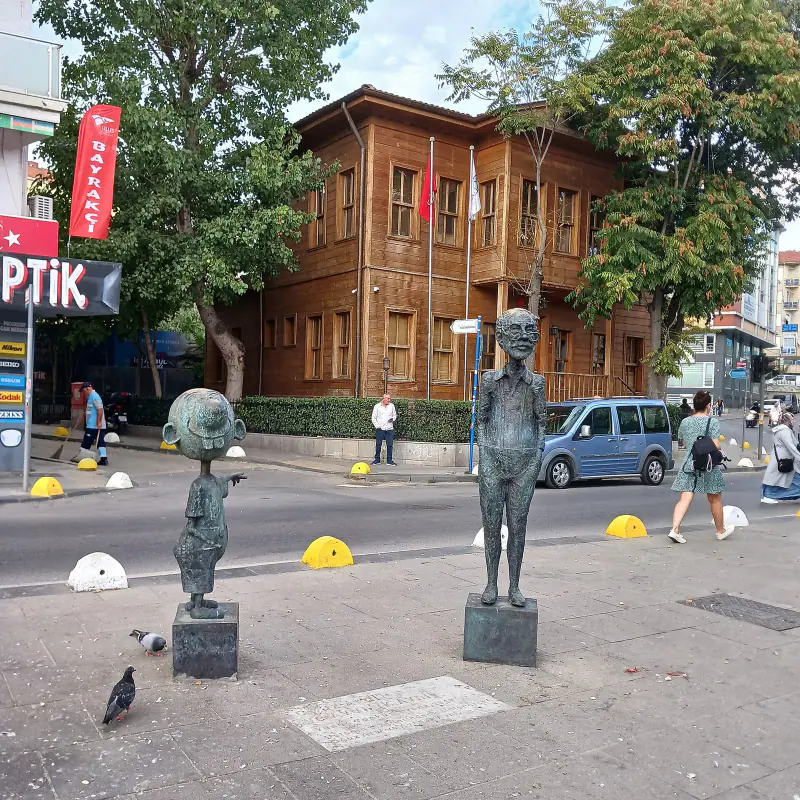
Photo from Wikimedia Commons (CC0): Basak. Credits
Guided tours are great when you want someone else to do the thinking. A self-guided walking tour gives you something else: your own pace, your own stops, and the freedom to sit down for tea when the light is good. Doing it well takes about an hour of planning. This guide walks you through that hour.
1. Start with a theme, not a list
A list of famous sights makes a tiring day. A theme makes a walk. Pick one idea and let it choose your stops:
- One neighbourhood, end to end. Walk a district from its market to its waterfront.
- A thread through history. Follow one era, one architect or one river.
- Food and drink. A bakery to start, a market in the middle, a café to finish.
- Views. Link the viewpoints, and plan the climb so you finish on the best one.
A theme also makes the walk easier to remember and easier to share. "The old harbour at sunrise" sticks. "Seven sights" does not.
2. Choose five to eight stops
Most people enjoy five to eight real stops in a half day. More than that and they blur together. For each stop, write down three things: why it matters to you, how long you want there, and whether it has opening hours or tickets.
Look at your stops on a map before you commit. If one sits far from the rest, it either becomes the finish (with a way home from there) or it waits for another day.
3. Draw the route
Avoid doubling back
Put the stops in an order that flows: a line or a loop, never a zigzag. A line from A to B feels like a journey. A loop is handy when your hotel or a station is the start.
Let gravity help
Hilly cities reward walking downhill. Start high and finish by the water, close to a tram, a ferry or a metro station.
Measure the walking distance, not the straight line
Use a maps app's walking directions between stops. Stairs, bridges and closed streets add more than you think. For a relaxed half day, three to six kilometres of walking is plenty.
4. Set a fair pace
People walk around 4 to 5 km an hour in a city, but a tour is not a commute. With photos, crossings and the odd detour, plan about 20 to 30 minutes per kilometre. Then add the time you want at each stop on top.
| Walk | Walking | Plan for |
|---|---|---|
| Short city walk | 2 to 3 km | 1.5 to 2 hours |
| Half day | 4 to 6 km | 3 to 4 hours |
| Full day, with lunch | 8 to 12 km | 6 to 7 hours |
Build in one real break. A bench in a park, a tea at a pier. Walks fall apart when people get hungry, long before they get tired.
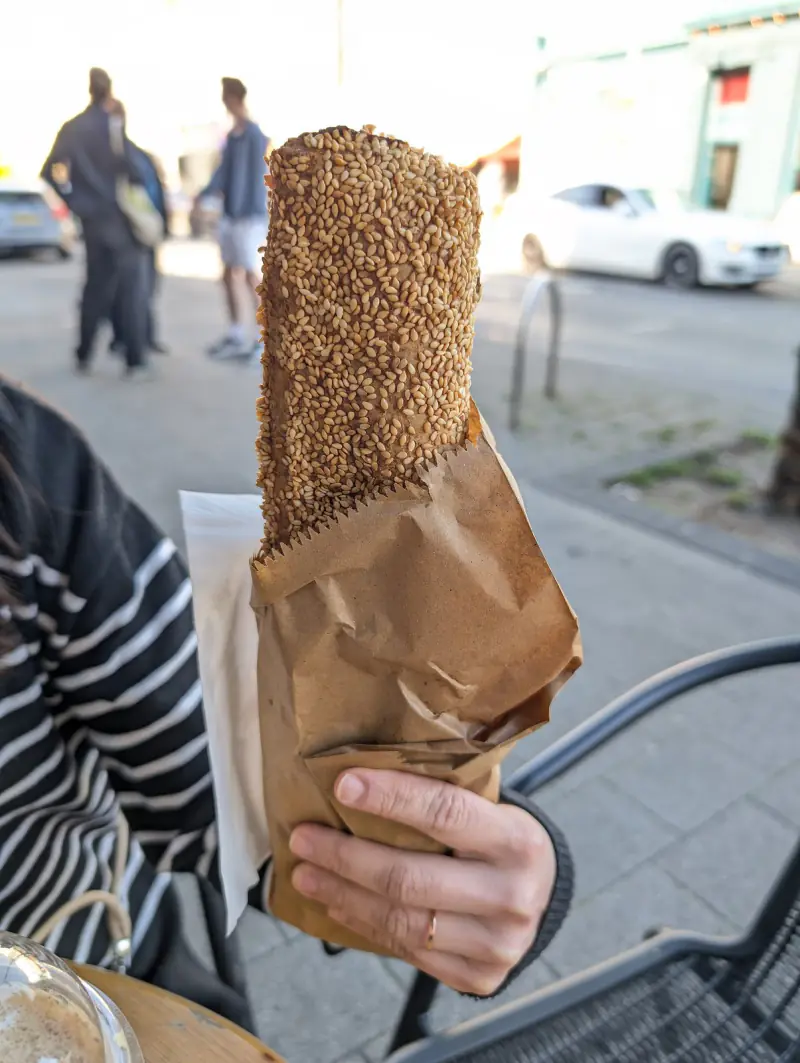
Photo from Wikimedia Commons (CC0): Andy Li. Credits
5. Time it to the light and the crowds
The first two hours after sunrise are the best-kept secret of city walking. Streets are quiet, the light is soft and long, and places that are packed at noon are yours. Late afternoon into dusk is the other sweet spot, especially along the water.
Check opening hours, closing days and ticket rules on each place's official website, close to your date. Places of worship may close to visitors during services and usually expect covered shoulders and knees.
6. Pack light, prepare a little
- Comfortable shoes you have already walked in.
- Water, a small snack, and a layer for the wind near the water.
- A charged phone, and a small power bank on long days.
- Your stops written down where you can read them without signal: a note, a screenshot or a sheet of paper.
- Your way back: the nearest tram, ferry or taxi rank to the finish.
7. On the day: walk it, keep it
Hold the plan loosely. If a side street looks good, take it. The plan is there so you can wander without worrying.
This is also where a walking tour app earns its place. forWalking records your walk in the background, even with the screen locked, so the phone stays in your pocket between stops. Every photo you take is pinned to the spot where you took it, and the route is drawn on a real map with a thin green-to-red wire that shows which way you went.
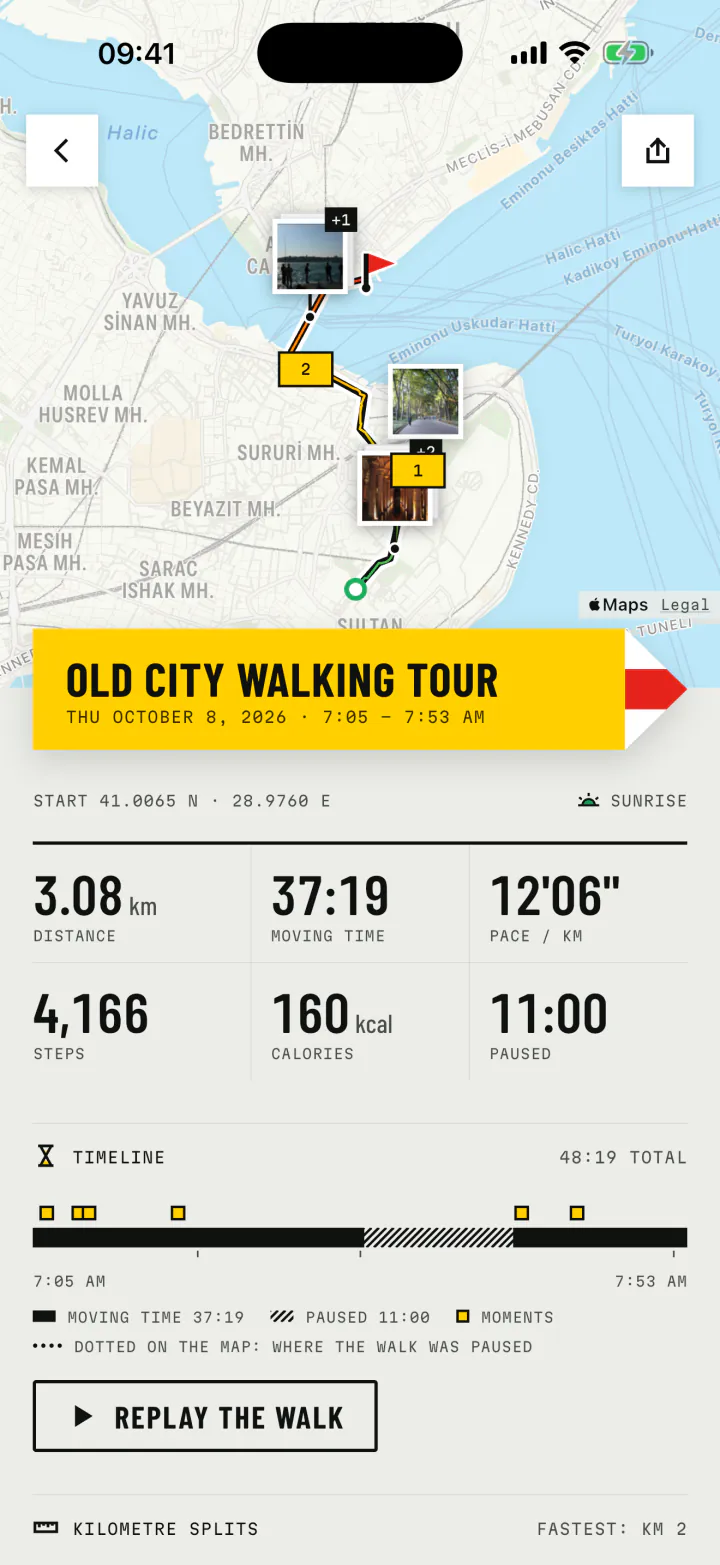
Back at the hotel you have a trail report: distance, moving time, pace, steps, a timeline of your stops and pauses, and kilometre splits. Rides stay out of the numbers. A car or a ferry is told apart from walking on its own, you can mark a bus or a tram yourself, and none of them counts as your walk.
8. Turn your walk into a guide for others
The best self-guided tours are often someone else's good day, written down. Once you have walked yours, pass it on. In forWalking you can send your photo points as Google Maps or Apple Maps links, share directions through the photo stops in order, or export the route as GPX or KML for other apps. Friends can then follow the same route, stop by stop. See how your walk becomes a walking guide.
Try a real routeIstanbul: Sultanahmet to the Galata BridgeA quick checklist
- One theme.
- Five to eight stops, one of them optional.
- A line or a loop, downhill if you can.
- Three to six kilometres for a half day.
- Hours and rules checked on official sites.
- One real break.
- A way home from the finish.
Want ideas for what to do between the stops? Our photo walk ideas turn any route into something worth photographing.


forWalking: Tours Map Photos iPhone and Android